Acetabular Preparation in Total Hip Arthroplasty (THA): Building the Foundation for Implant Fit
TL;DR
- Acetabular preparation creates the foundation for implant fit and fixation in Total Hip Arthroplasty (THA)
- Acetabular reamers play a central role in shaping the acetabulum during preparation
- Supporting instrumentation contributes to control, handling, and workflow across preparation and implantation
- Sourcing a comprehensive acetabular portfolio from a single supplier can help simplify procurement and support consistency across instruments used in the workflow
- Enztec’s acetabular instruments are developed around shared design principles, supporting a familiar user experience across multiple stages of the procedure
The Foundation Behind Acetabular Implant Fit
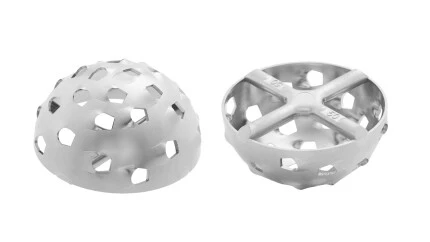 In total hip arthroplasty (THA), acetabular preparation lays the foundation for everything that follows. Before a cup can be implanted, the acetabulum must be prepared accurately and consistently to support the intended fit and fixation.
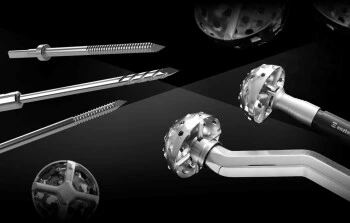
Acetabular reamers play a critical role in this process. They shape the socket, establish the initial geometry of the acetabulum, and create the foundation for the steps that follow.
However, achieving reliable preparation is not defined by the reamer alone. It is influenced by the broader instrumentation used throughout the workflow, as well as the ability to source a solution from a trusted partner.
More Than Reamers: A Connected Acetabular Workflow
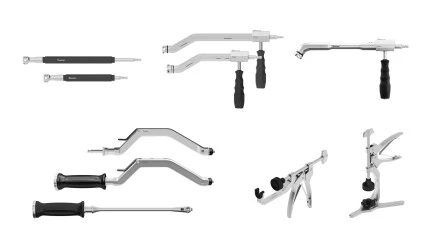 While acetabular reamers sit at the centre of preparation, they are part of a broader system of instruments that support the procedure from preparation through to implantation.
When instruments are sourced from multiple suppliers, differences in design approach, handling characteristics, and interface design can introduce variation across the workflow. This does not relate to surgical technique, but rather to how instruments feel, interact, and transition during use.
Enztec offers a comprehensive acetabular portfolio that includes reamers, reamer drivers, cup impactors, and a dual mobility head press for applicable systems. These instruments are developed around shared design principles, supporting a more familiar and consistent user experience when used together across the procedure.
This allows key instruments across the acetabular workflow to be sourced from a single trusted supplier, while maintaining continuity in handling and interface design from preparation through to implantation.
Supporting Reliable Preparation
 Every acetabulum presents different anatomical considerations, and surgeons rely on controlled progression through preparation to achieve the intended outcome.
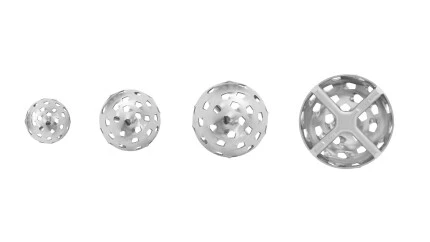
To reflect this, Enztec offers acetabular reamers in 1 mm increments from 36 mm to 74 mm, supporting incremental progression across a wide range of patient anatomies and surgical approaches.
Designed with a hemispherical profile to support accurate cavity formation and controlled bone removal, Enztec acetabular reamers are manufactured to a sizing accuracy of ±0.25 mm. Sharp cutting geometry supports efficient engagement during preparation, while consistent sizing characteristics facilitate predictable progression through the range.
This combination of design features delivers controlled preparation across the acetabular range, helping maintain alignment with intended implant selection and surgical approach throughout preparation.
Instrumentation Designed Around Surgeon Preference
Surgeons often have established preferences for how they approach acetabular preparation, including how instruments are handled, controlled, and integrated into their workflow.
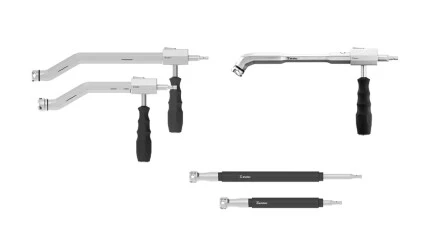 To support this, Enztec offers multiple reamer driver configurations, including:
This range allows selection based on workflow preference rather than requiring adaptation to a single fixed configuration.
The same approach extends across the acetabular portfolio. While reamer drivers support control during preparation, cup impactors play an important role during implantation, helping translate preparation into accurate cup placement and final seating.
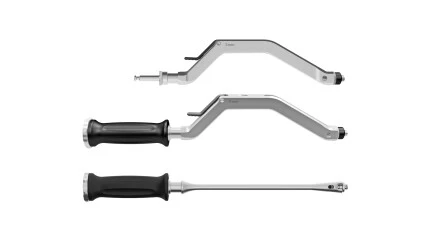 Enztec cup impactors are available in multiple configurations to support different implant systems and surgical preferences, including:
For procedures involving dual mobility systems, the Enztec dual mobility head press provides a dedicated solution to support controlled assembly of the femoral head and liner.
Across these instruments, shared design principles help maintain familiarity in handling and interface design when tools are used together. This supports a more familiar user experience across the workflow, particularly when instruments are sourced from the same portfolio.
A Comprehensive Acetabular Portfolio from a Trusted Partner
Instrument performance is only one part of clinical and operational decision making. Availability, supply continuity, and long-term planning are also important considerations when supporting surgical scheduling and procurement.
As a result, sourcing decisions often extend beyond individual instruments to include broader factors such as supplier relationships, portfolio breadth, and support across the entire workflow.
Acetabular preparation is part of a connected surgical workflow rather than an isolated step. Reamers establish the foundation of preparation, while supporting instruments contribute to control, handling, and implantation.
Enztec’s acetabular portfolio brings these elements together under a single supplier, including reamers, reamer drivers, cup impactors, and dual mobility head press solutions.
Rather than introducing variation through multiple suppliers with different design approaches, sourcing from a single portfolio can help reduce unnecessary differences in instrument handling and interface design.
Ultimately, the foundation behind every fit is shaped not only by preparation, but by how the entire acetabular system comes together.
Key Takeaways
- Acetabular preparation forms the foundation for implant fit and fixation in THA
- Acetabular reamers play a central role in shaping the acetabulum during preparation
- Supporting instruments contribute to control, handling, and consistency across the acetabular workflow
- Sourcing a comprehensive acetabular portfolio from a single supplier can help reduce variation in instrumentation across the workflow
- Enztec instruments are developed around shared design principles to support familiarity across preparation and implantation
Frequently Asked Questions
Why is an accurate ream so important in THA?
Reaming establishes the foundation for the artificial joint. Precise bone removal directly impacts the implant's stability, the joint's biomechanics, and its long-term survivorship.
How does having a complete range of acetabular reamer sizes impact initial implant fixation?
It prevents a mismatch between the reamed cavity and the implant size. A full range allows surgeons to transition in precise 1 mm increments. This ensures a perfect "press-fit" geometry, maximizing bone-to-implant contact while minimizing the risk of under-reaming (which can cause pelvic fractures) or over-reaming (which can cause implant micromotion and loosening).
Why is it necessary to have different reamer handles available?
Patient anatomy and surgical approaches vary wildly. Having a range of reamer drivers such as straight, offset, or angled designs ensures the surgeon can maintain a perpendicular line of sight and accurate trajectory. This is especially critical in minimally invasive approaches to prevent high-side reaming or unintended cup verticality.
How do sharp reamer baskets contribute to precise bone preparation?
Worn or dull reamers generate excessive heat (causing bone necrosis) and require the surgeon to apply heavy manual pressure, which can cause the reamer to skid or eccentric-ream. A fresh, sharp reamer cuts cleanly through sclerotic bone, maintaining a perfectly spherical cavity without displacing the true centre of rotation.