Femoral Alignment in TKA: Supporting Different Surgical Techniques
TL;DR / Key Takeaways
- Total knee arthroplasty (TKA) can utilize various alignment philosophies, including mechanical, kinematic or personalised approaches.
- Surgeons often adapt their workflow based on patient anatomy and personal preference
- Traditional instruments can limit flexibility and add extra steps to the surgical workflow
- Modular, configurable instruments can support different approaches without disrupting theatre flow
- The Enztec Adjustable Distal Femoral Alignment Guide offers adaptability across alignment strategies
Alignment in TKA Is Not One-Size-Fits-All
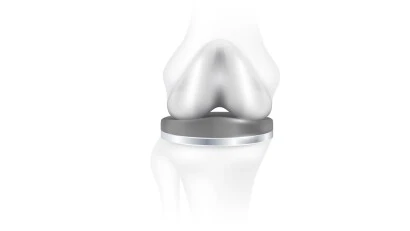 Total knee arthroplasty aims to restore function and to remove pain for each patient. Over time, several alignment philosophies have emerged and while kinematic alignment has gained recent attention, mechanical alignment remains widely used.
The key point is that there is not a single “right” approach. Surgeons often adjust their technique depending on patient anatomy, implant design, and workflow preferences.
This variability is why instruments designed to support multiple alignment approaches, such as the Enztec Adjustable Distal Femoral Alignment Guide, are increasingly relevant in modern TKA practice.
Why Surgeons May Utilize Different Alignment Approaches
Alignment approaches are rarely rigid in practice. Surgeons often operate in a middle ground between established techniques. Factors influencing this include:
- Individual patient anatomy: Unique deformities or native alignment may require adaptation
- Surgical preference: training, experience and comfort guide decision making
- Case complexity: certain procedures require intraoperative adjustment
These variations in practice are exactly where adaptable instrumentation becomes most relevant.
Because of this, tools that support flexibility without interrupting surgical flow are highly valuable.
Where Traditional Instrumentation Can Be Limiting
Many femoral alignment guides are designed around fixed configurations. While effective within their intended system, limitations can include:
- Alignment tied to a single approach
- Requirement for multiple instruments to support variation
- Increased tray volume and setup complexity
- Interruptions to workflow when switching components
These constraints can make it harder to respond efficiently to patient-specific anatomy or surgeon preference.
What Flexible Instrumentation Looks Like in Practice
Flexible instrumentation aims to reduce these constraints by enabling:
- Support for multiple alignment approaches within one system
- Minimal component changes during surgery
- Compatibility with a range of patient anatomies
- Continuity of workflow with fewer interruptions
A More Adaptable Approach to Femoral Alignment
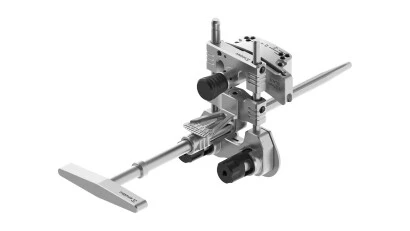
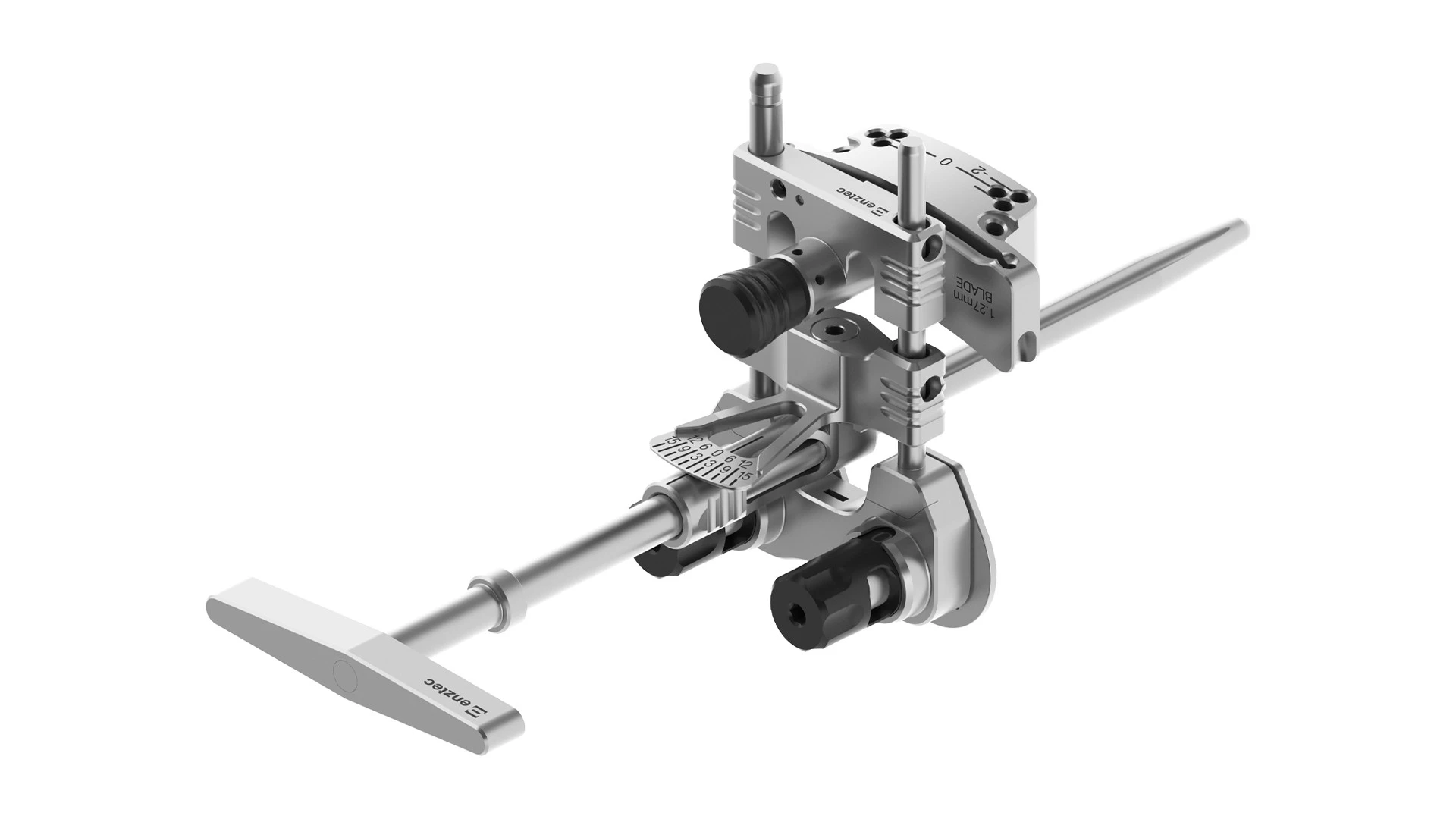
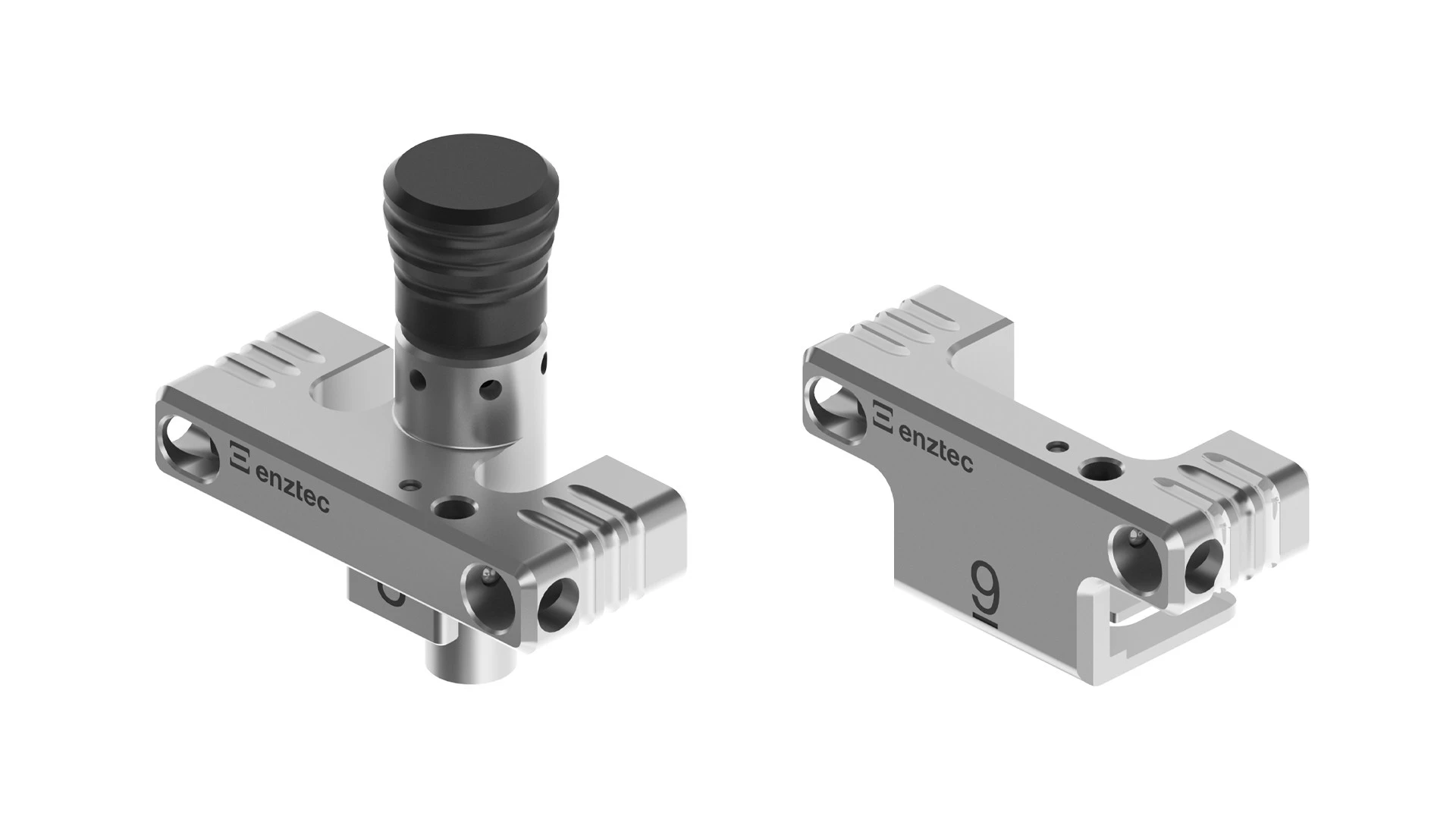
The Enztec Adjustable Distal Femoral Alignment Guide is designed to support variation in alignment approaches without adding complexity.
Rather than locking surgeons into a single approach, it enables a more adaptable way to reference distal femoral anatomy, helping teams respond to patient-specific needs while maintaining control and efficiency in theatre.
Configurable to your workflow
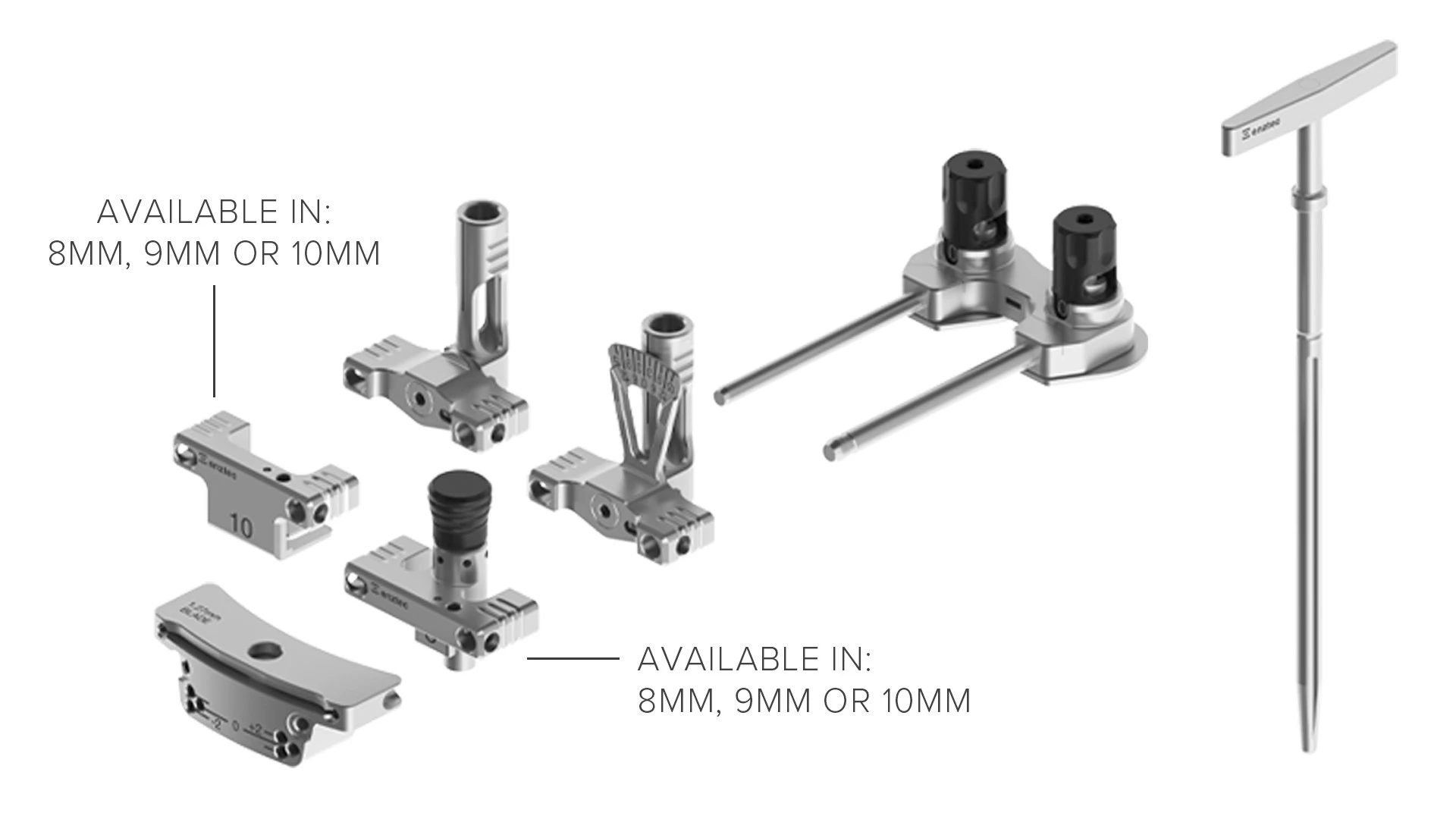
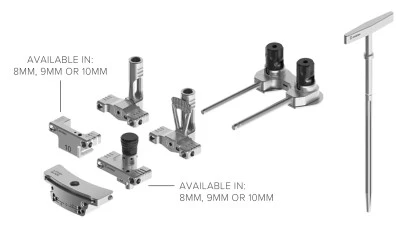 Through a modular range of components, the guide can be assembled to best support existing setups and preferred surgical workflows. This allows surgical teams to configure the instrument around how they operate, rather than adapting their process to fit a fixed system.
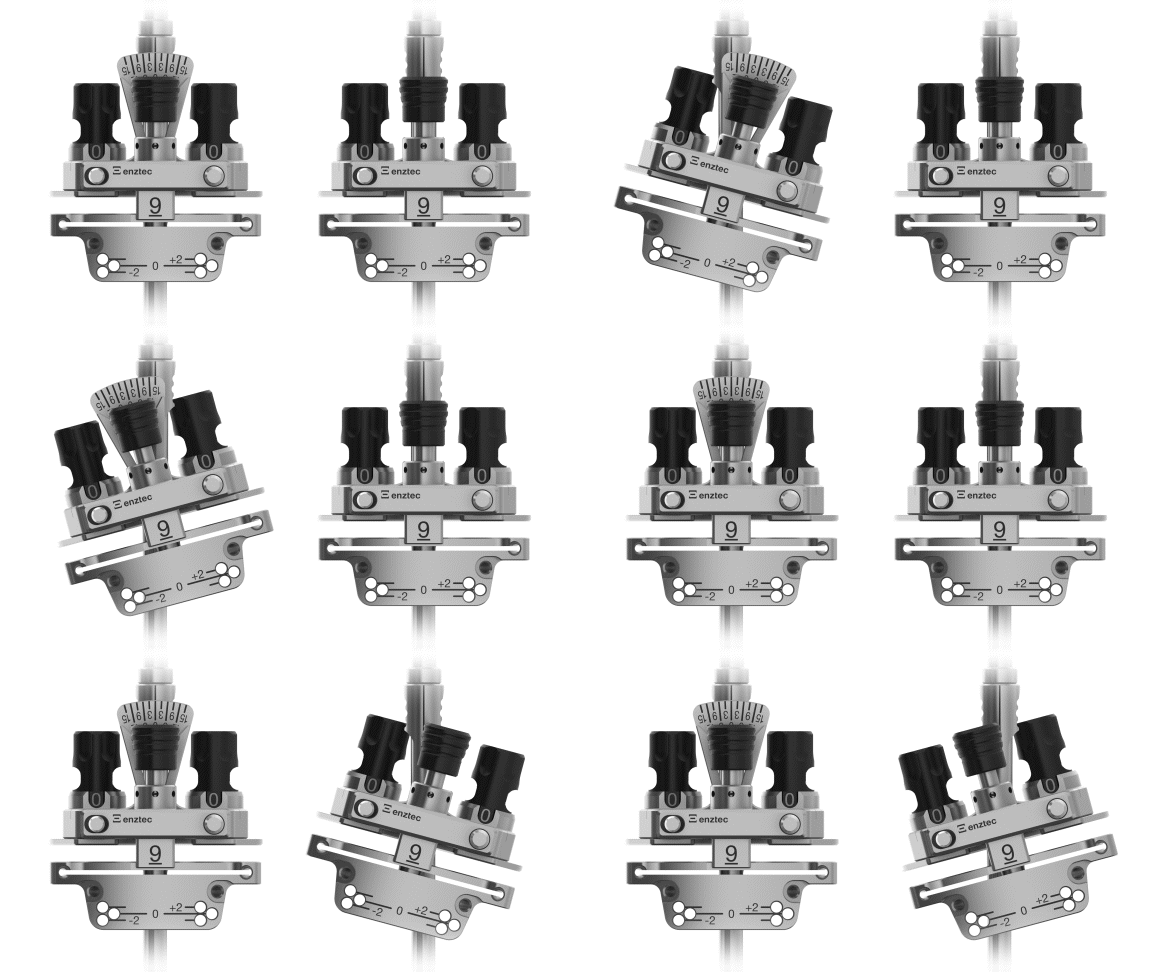
Optional real time varus/valgus feedback via the sagittal alignment connector can be incorporated as needed, offering a ±15° range each way (30° total) to support intraoperative decision making without enforcing a single alignment philosophy or restricting movement.
A single instrument supports both left and right knees, helping reduce tray weight, inventory, and setup complexity while maintaining performance through a highly adaptable design.
Flexible Adjustments and consistent anatomical contact
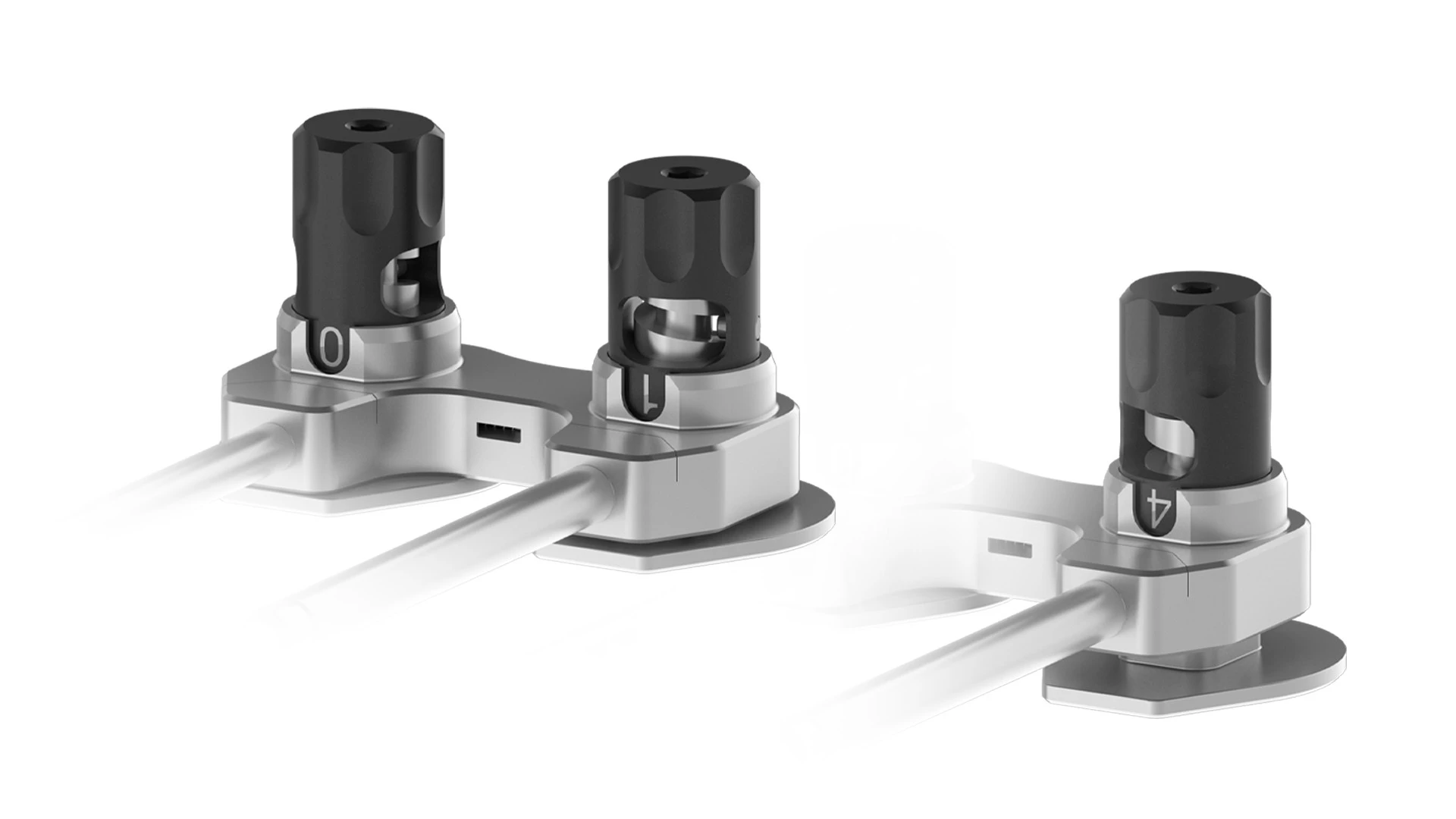
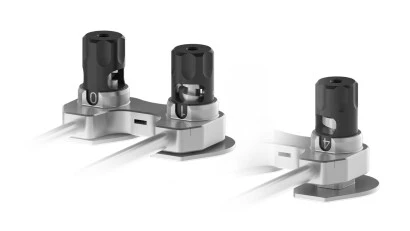 Independently adjustable paddles provide a 0–4 mm range to compensate for cartilage wear, osteoarthritis-related loss, and underlying bone changes. This extended range goes beyond the more typical 0–2 mm, supporting more accurate distal referencing across a wider range of patient anatomies.
Each paddle can be adjusted independently, either pre-set or refined in situ, allowing surgeons to accommodate differences between the medial and lateral condyles without changing components. The integrated adjustment range reduces the need for multiple fixed instruments or shims, simplifying inventory and supporting accurate distal femoral referencing across a broad range of anatomies.
Because the paddle system is decoupled from the femoral axis reference, it allows the paddles to conform more naturally to patient anatomy rather than being constrained by instrument geometry. The outer profile of each paddle has been designed to achieve reliable contact across a wide range of knee sizes and morphologies while minimising impingement with surrounding soft tissues and bony structures. This supports consistent engagement with the distal condyles, enabling stable and repeatable referencing despite anatomical variation.
Together, the adjustment range, independent paddle control, and refined geometry function as a single system, enabling accurate and repeatable distal femoral referencing across a broad range of patients.
Compatibility with your system
The modular design enables compatibility across different systems, with multiple cutting block connectors and resection options available.
This gives surgeons the flexibility to use their preferred implant platform while incorporating the guide into established workflows, reducing the need for additional instrumentation or procedural change.
Easy Handling
For seamless handling in theatre, an easy pull button is incorporated into the cutting block connector, allowing quick, one-handed removal of the device prior to resection.
This supports smoother procedural flow by reducing unnecessary steps and enabling a more efficient transition between stages of surgery.
What This Enables in Theatre
Using a flexible guide, surgical teams can:
- Adjust femoral setup to suit patient anatomy and case requirements
- Maintain control over configuration without interrupting workflow
- Reduce reliance on multiple instrument sets and duplicated trays
- Support consistent referencing across different alignment approaches and surgeon preferences
- Make intraoperative adjustments with confidence, without compromising efficiency or accuracy
Why Flexibility Is Becoming More Important
Alignment approaches in TKA continue to evolve, and variation in technique is likely to remain. Instruments that adapt to different workflows help surgical teams respond to changing practice patterns and patient needs.
Flexibility is not about choosing one approach over another. It is about enabling choice while maintaining efficiency, consistency, and control in theatre.
Frequently Asked Questions
What is kinematic alignment in TKA?
Kinematic alignment is an approach aimed at restoring the patient’s native knee alignment. It is one of several alignment approaches used in current practice.
What is mechanical alignment in TKA?
Mechanical alignment is a widely used approach that focuses on standardised positioning of femoral and tibial components. Both mechanical and kinematic approaches are used in modern surgical practice.
Can surgeons adapt their alignment approach during surgery?
Yes. Individual patient anatomy and intraoperative findings often require adjustments to the surgical plan or execution.
What should a femoral alignment guide allow for?
It should support flexibility, enable different alignment approaches, and maintain workflow efficiency without unnecessary instrument changes.
Is the Enztec Adjustable Distal Femoral Alignment Guide limited to one alignment philosophy?
No. It is designed to support a range of alignment approaches, allowing surgeons to apply their preferred technique without instrument constraints.