TD;LR
- Tray rationalisation reduces orthopaedic instrument sets to lower sterilisation costs, improve operating room efficiency, and simplify hospital workflows.
- Hospitals are prioritising fewer, more purposeful instruments that support the most common surgical workflows without compromising clinical performance.
- Design strategies such as modular instrumentation, implant-agnostic compatibility, and selected single-use instruments help reduce tray size and complexity.
- The biggest drivers vary by region, with logistics, storage, and processing pressures leading adoption in the US, while Europe places greater emphasis on reducing tray weight and improving handling.
- Successful tray rationalisation is driven by thoughtful instrument design that balances operational efficiency with surgeon confidence, usability, and procedural flexibility.
Tray rationalisation in orthopaedics: why hospitals are reducing instrument sets
Hospitals are incentivised to reduce the number and complexity of orthopaedic instrument trays to reduce the load on their Sterile Processing Department (SPD) improve operating room efficiency, and simplify workflows. The shift is strongest in the US, where space, logistics, and sterilisation pressures are highest particularly in Ambulatory Surgical Centres (ASC), but this is a global trend.
“In the US, it’s about reducing the number of things in the room. Less to store, move, clean, and sterilise,” says Enztec CEO, Iain McMillan.
This shift sits at the centre of tray rationalisation in orthopaedics and broader surgical instrument tray optimisation strategies. It’s not just about removing instruments; it’s about making sure every instrument earns its place in the tray and processes involved in making them available in theatre..
For device companies, tray rationalisation also offers a chance to reduce capital costs, but this is reliant on having well-considered instrumentation that supports surgical choices while reducing operational burden.
What is tray rationalisation in orthopaedics?
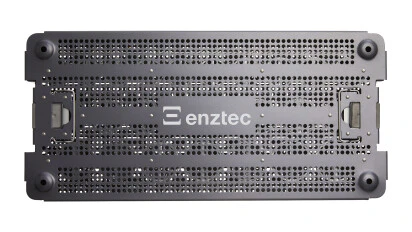 Tray rationalisation in orthopaedics is the process of reducing surgical instrument sets by removing unused tools and consolidating functions. Done well it improves efficiency, lowers sterilisation costs, and simplifies workflows without affecting clinical outcomes or functionality.
This is most easily achieved in traditional sets that include instruments that are rarely used but still require full processing simply by being present in the tray. Technology is also playing a part in reducing the number of instruments and trays, with robotic procedures for example requiring far fewer instruments, but those that remain can in some instances be significantly more complex.
Why hospitals are reducing instrument sets
Rising sterilisation and reprocessing costs
Every instrument must be cleaned, inspected, and sterilised, whether it is used or not. This places a heavy burden on sterile processing teams and adds cost to every procedure.
Low instrument utilisation
Historically many trays are designed to cover every possible scenario, and many of these legacy sets remain in the market.
Designing for the most common workflow rather than every variation is now a key strategy for reducing tray size and complexity.
Operating room efficiency
Fewer, better-designed trays mean faster setup, less searching, and more consistent procedures. This supports a smoother surgical flow and helps teams keep focus where it matters.
Storage and logistics pressure
Storage and logistics pressure
In the US, trays are often transported in and out of hospitals for each procedure. Reducing tray count lowers handling effort, simplifies logistics, and helps device companies remove barriers to instrument availability.
Equally when shipments of trays arrive on-site at hospitals they take up considerable amounts of storage space, which is often at a premium. Each tray is also required to be processed before and after the procedure, when it is then returned to the implant sales representative for outbound logistics. This all creates a significant workload for SPD, administration staff and sales reps alike.
“If you’ve got to move six trays instead of two, that’s a lot more work.” - Iain McMillan
Different drivers in the US and Europe
The need for smarter instrument systems is global, although the drivers differ by market. In the US, tray reduction is driven by logistics, space, and cost. In Europe, the focus is more on reducing weight and improving handling for theatre staff.
The shift towards efficiency by design
Orthopaedic instrument design has shifted from broad, all-inclusive systems to focused, procedure-driven sets. In some procedures, systems that historically required six to eight trays are now being reduced through better design and technology.
“Ten years ago, sets included every possible option. Now we design for what 90% of surgeons will actually use.” - Iain McMillan
This approach reduces tray quantity, weight, and complexity, while protecting what matters most in theatre: intuitive layout, predictable workflows, and whole surgical team confidence. It reflects a wider move towards instrument systems that are easier to manage, trusted by surgical teams, and built for today’s operating room pressures.
How instrument design enables tray rationalisation
Modular instrumentation
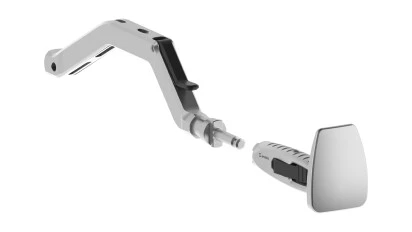 Purposeful modular design allows multiple stages of a procedure to be supported by fewer components, or for a common element to be re-used at several stages of the procedure. For example a set of instruments might contain one modular handle, which can be used with multiple accessories throughout the procedure. However this modularity must be introduced without compromising surgical function, speed, feel, or control. This reduces duplication, tray size, and overall system weight, while keeping the instrument system intuitive in hand.
Iain notes that modularity can be your friend, but if done poorly, it can slow down the operating room. For example if a modular handle is used with several accessories, in rapid sequence, then the act of constantly attaching and detaching the modular handle can be disruptive and cause additional unnecessary pressures on theatre staff. There is a time and place for modularity, and also the need for modular or reusable items to be inherently intuitive to use.
Effective modular design places flexibility at logical points in the procedure, avoiding unnecessary reconfiguration during surgery.
Off-the-shelf compatibility
Another place where rationisation and efficiency can play a part is the use of Instruments that work across multiple procedures / implant systems. While still rare, such agnostic instruments can reduce the need for different instrument sets. This has potential to simplify inventory, improve logistics, and support easier training and utilisation across different surgical procedures.
Single-use instruments
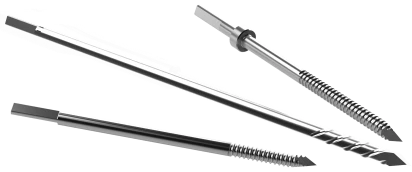 Single-use instruments remove cleaning, sterilisation, and return logistics from the workflow. As Iain notes, there are many hidden costs in cleaning and logistics; single-use instruments can help streamline this. Such single use products are also fully optimised for size, weight and always in optimum condition being always clean and sharp. They give surgical teams greater confidence that the right instrument is ready when needed.
Adoption is increasing, although cost allocation and environmental considerations remain important factors.
Benefits of tray rationalisation
- Lower sterilisation and processing costs
- Reduced operating room setup time
- Improved workflow consistency
- Less storage and inventory
- Faster case turnover
- A simple way to understand the impact:
“It’s like setting the table with every knife and fork every night, even though you’ll only use one, then having to clean them all.” - Iain McMillan
Challenges and considerations
- Surgeon preferences vary, so reducing trays too far can limit flexibility
- Modular systems must be carefully designed to avoid slowing procedures
- Clinical validation is required before removing instruments
- Change management is needed across surgical and sterile teams
The goal is not the fewest trays, it is the right trays, designed around surgical and operational performance. Poorly planned tray reduction can slow teams down, create uncertainty, and undermine the efficiency it is meant to deliver.
The future of orthopaedic instrument sets
All evidence shows orthopaedic instrument systems will continue to become smaller, more focused, and more adaptable. Tray rationalisation in orthopaedics will increasingly be driven by data, thoughtful design, and technology.
Key trends include modular and hybrid systems that combine reusable and single-use tools, data-driven optimisation based on real usage, and procedure-specific configurations.
Smarter design and technology are already reducing tray requirements by replacing large instrument groups with smaller, multi-functional components.
How Enztec supports tray rationalisation
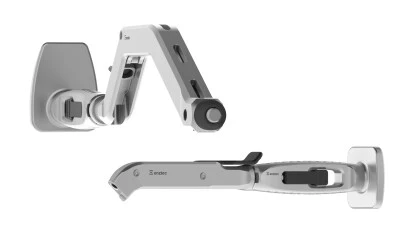 Enztec supports tray rationalisation through thoughtful instrument design, not reduction for reduction’s sake.
Our team works with device companies to design premium orthopaedic instruments that support efficient workflows, surgeon confidence, and faster market adoption.
With over 30 years of experience, Enztec brings global orthopaedic instrument expertise to complex design challenges. We understand that every instrument must earn its place in the tray, through usability, performance, and trust in theatre.
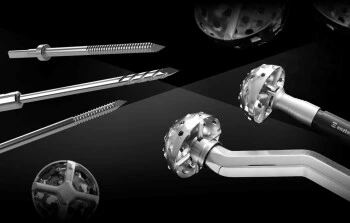
For example, Enztec’s modular hip system uses a single handle across multiple stages of the procedure, including broaching and cup impaction. This reduces duplication, tray size, and weight while supporting efficiency at each stage of surgery, often while also helping reduce the capital cost of instrument sets as well..
This reflects Enztec’s broader design philosophy: reduce what is not needed, keep what matters, and create instruments that feel intuitive in the surgeon’s hand.
Get in touch
Talk to us about optimising your instrument sets.
If you are reviewing instrument tray size, modularity, or single-use opportunities, Enztec can help. Our team works with device companies to design premium orthopaedic instruments that support efficient workflows, surgeon confidence, and market adoption.