Reusable vs single-use orthopaedic instruments: cost and sustainability trends
TL;DR
- The reusable vs single-use debate is accelerating as hospitals face growing pressure around sterile processing capacity, costs, logistics, and procedure readiness.
- Reusable instruments remain essential where strength, durability, and surgeon feel are critical, particularly in heavy orthopaedic applications.
- Single-use or limited-use components can reduce reprocessing burden, improve availability, and help address challenges associated with cleaning, wear, and contamination risk.
- Cost and sustainability should be evaluated across the full instrument lifecycle, not just purchase price or visible waste.
- Hybrid instrument systems that combine reusable core instruments with single-use or limited-use components may offer the most practical balance of performance, efficiency, and scalability.
Quick answer: reusable, single-use or hybrid?
Reusable instruments are often best where strength and surgeon perception of accuracy matter. Single-use instruments can make sense where cleaning complexity, sterile processing capacity, infection risk, theatre disruption or logistics create hidden costs. In orthopaedics, the most practical future is likely to be hybrid, combining reusable core instruments with sterile single-use or limited-use components.
| Question | Short Answer |
| Are reusable instruments cheaper? | From a simple ongoing perspective, but only when reprocessing and logistics are efficient, and for simple, easy-to-reprocess instruments. |
| Are single-use instruments more sustainable? | Sometimes, but it depends on the product's design, procedure, and complexity for reprocessing. The full life cycle needs to be considered. |
| When does single-use make sense? | For hard-to-clean items that may be subject to wear, procedure-specific or easily damaged components. |
| What perioperative benefits can single-use instruments offer? | They can bypass sterile processing, reduce inspection burden, improve readiness and lower the risk of dirty or contaminated instruments disrupting theatre flow. |
| When does reusable make sense? | Where strength, durability and surgeon feel are essential. |
| What is the likely future? | Hybrid systems that combine reusable and single-use elements. |
Reusable vs single-use orthopaedic instruments is not a simple either-or decision. It is a question of instrument strategy.
Device companies and hospitals are now looking beyond unit cost. They are considering the impact of contaminated instruments identified in the sterile field, causing disruption and additional costs. Beyond this, the sterile processing burden, instrument inspection, transport, tray complexity, sustainability, theatre efficiency, and surgeon confidence are notable factors.
As Iain McMillan, CEO of Enztec, explains:
“When it comes to orthopaedic instruments, particularly for hip and knee replacement, heavier orthopaedics, that transition is something people are looking towards, but it is still in its infancy.”
The opportunity is not to replace every reusable instrument. It is about choosing the right model for the right instrument, procedure, and market.
What is the difference between reusable and single-use orthopaedic instruments?
Reusable orthopaedic instruments are cleaned, inspected, sterilised and reused across multiple procedures. Single-use orthopaedic instruments are supplied sterile and disposed of after one procedure.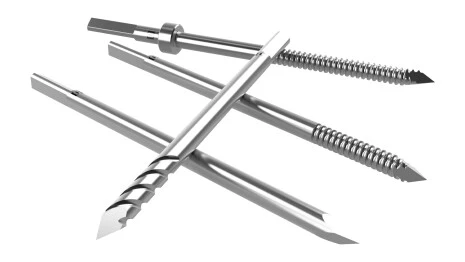
The real difference is not just usage. It is how each model affects cost, logistics, infection control, risk, waste and surgical workflow.
Reusable instruments often sit within trays. Those trays must be transported, opened, checked, cleaned, wrapped, sterilised, stored and reused. Often, instruments not used in a procedure may still undergo the reprocessing cycle. Beyond this, tray weight continues to be a challenge as people increase the number of instruments in a tray, in an effort to reduce the overall tray count
Single-use instruments remove many of those steps but introduce other considerations, including material waste, per-procedure cost, supply reliability, and disposal.
Why is this debate accelerating now?
The reusable versus single-use debate is accelerating because hospitals and device companies are under pressure to reduce cost, improve theatre efficiency, manage sterile processing workload and try to manage infection risks.
For device companies, instrument availability can affect implant sales. If a set is missing, contaminated, incomplete, blunt, or not ready, the impact can extend to the surgeon, rep, hospital, and patient.
For hospitals, sterile processing teams carry much of the burden. These teams are essential to procedure readiness, but they are overloaded, understaffed, and their work is often invisible.
Iain describes this clearly:
“Central Processing departments are the unsung heroes that’re making it all happen, but it’s invisible for the most part. It is often one of the least resourced teams, which is under increasing pressure to turn more and more kits around”
That invisibility matters. Many costs associated with reusable systems are spread across different teams, making them harder to see and measure.
What are the hidden costs of reusable orthopaedic instruments?
The hidden costs of reusable orthopaedic instruments include tray kitting, cleaning, sterilisation, transport, storage, repairs, tracking, missing instruments, damaged tools, rep time and theatre delays. These costs are often not visible in the purchase price, but they can affect the total cost of ownership.
Common hidden costs include: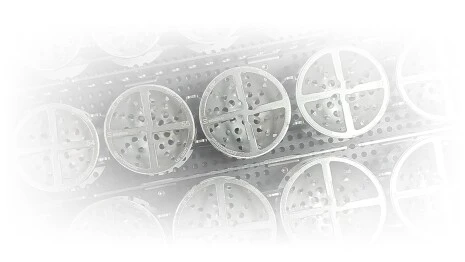
- Capital investment in instrument sets
- Tray assembly and checking
- Sterile processing labour
- Water, power and cleaning chemicals
- Blue wrap and packaging
- Repairs, maintenance and replacement
- Storage and inventory tracking
- Freight between hospitals, warehouses and theatres
- Distributor and rep time
- Delays caused by missing, blunt or damaged tools
- Additional inspection burden for theatre staff
- Disruption when contamination is found after tray setup, resulting in back table breakdown and re-setup
- Reprocessing difficulty for complex instruments such as reamers
- Infection prevention workload
- Sterile services capacity constraints
For orthopaedic OEMs, these costs can become a barrier to scale. More implant volume can mean more instrument sets, more logistics and more capital tied up in reusable trays.
As Iain explains:
“There’s a huge logistics, energy and effort cost in moving instrument sets around, and much of that is not readily identified because it is just what people do.”
What perioperative benefits can single-use instruments offer?
Single-use orthopaedic instruments can reduce perioperative burden by bypassing sterile processing, reducing tray inspection, improving instrument readiness and lowering the risk of dirty or contaminated instruments disrupting theatre flow.
This matters because sterile services are under increasing pressure. In many hospitals, sterile processing capacity can constrain theatre efficiency and procedural growth. Complex instruments, such as reamers, can be especially difficult to clean and inspect, which means their true reprocessing burden may be higher than average instrument cleaning costs suggest.
Reusable trays also create pressure in theatre. Staff may need to hold and inspect heavy, complex trays before placing instruments on the back table. If contamination is found after setup, the back table may need to be broken down and reset. If a dirty or incomplete instrument is only identified when it is needed, the case is disrupted, causing knock-on effects for that case and subsequent cases that day.
This is where sterile single-use or limited-use components can offer value beyond surgeon preference. They can support sterile services, infection prevention, operating room staff and surgeons by improving readiness and reducing avoidable friction in the perioperative workflow.
For orthopaedic OEMs, single-use and hybrid instrumentation is more than a product design choice. It can become a perioperative solution.
Are single-use orthopaedic instruments cheaper than reusable instruments?
Single-use orthopaedic instruments are not automatically cheaper than reusable instruments. They can reduce reprocessing, logistics, repair and tray management costs, but they create a per-procedure cost. The right comparison is lifecycle cost, including labour, sterilisation, transport, waste, repairs and procedure readiness.
Research into total knee arthroplasty has shown why the answer can vary by setting. A cost modelling study of sterile-packed single-use instruments for TKA found median total cost savings of $994 per case compared with traditional reusable instruments. Tray sterilisation was the largest driver of savings, followed by tray management and operating room turnover time.
The same study found that single-use instruments could enable an additional procedure on up to 51% of operating days due to savings in operating room turnover time.
That does not mean single-use instruments are always cheaper. It means the cost equation changes when reprocessing, logistics, theatre time and tray handling are included.
Reusable instruments may still be the most cost-effective option when they are durable, used frequently, easy to clean and supported by an efficient sterile processing system.
Single-use or limited-use components may make more sense when an instrument is:
- Hard to clean
- Prone to becoming blunt
- Easily damaged
- Procedure-specific
- Frequently missing or delayed
- Costly to transport and reprocess
- Part of an oversized tray with unused instruments
Which is more sustainable: reusable or single-use surgical instruments?
Reusable instruments are often assumed to be more sustainable because they create less visible waste. But sustainability depends on the full lifecycle. Reusable instruments require water, energy, chemicals, packaging, sterilisation and transport. Single-use instruments create material waste, but may reduce reprocessing and logistics.
There is no single answer for every procedure.
This is where lifecycle analysis matters. A Medacta knee replacement instrument LCA summary reported that its GMK Efficiency single-use instrumentation had a carbon footprint that was neutral when compared with conventional reusable metal instrumentation. The same summary reported that removing repeated washing and sterilisation could save up to 435 litres of water per knee procedure.
That supports Iain’s point that sustainability is not only about visible waste:
“It’s very easy to think we’re going to have a big pile of plastic thrown out after every procedure. But if you stand back and look at a traditional procedure using reusable instruments, the waste stream includes blue wrap, sterilisation, water, power, chemicals and logistics, which is not trivial.”
But the evidence is not one-directional.
A 2024 study on four-anchor rotator cuff repair found that reusable instrumentation produced less waste, lower waste disposal cost and lower waste-related carbon emissions than disposable systems for that procedure. The authors also noted that broader factors, such as manufacturing, sterilisation, patient outcomes, and instrument replacement, need further study before making definitive environmental claims.
The practical takeaway is simple: sustainability should be measured by lifecycle impact, not instinct.
When does single-use make sense in orthopaedics?
Single-use orthopaedic instruments make sense when the instrument is difficult to clean, likely to wear, prone to damage, procedure-specific, or expensive to manage through reusable trays. They can also support fast turnaround, predictable availability and reduced sterile processing burden.
Iain points to several areas where single-use or limited-use design can be useful:
- Precise jigs
- Device-specific components
- Pins, drills and reamers
- Cutting tools that become blunt
- Fine mechanisms that are difficult to clean
- Components that wear or damage over time
- Procedure-specific inserts
This does not mean replacing a full instrument set. In many cases, the better approach is to identify the small number of components that create the greatest operational burden.
That is where good design matters. A well-designed single-use component can reduce tray size, improve readiness and remove unnecessary reprocessing.
This is especially relevant for instruments such as reamers, where cleaning and inspection can be more difficult than average instrument reprocessing costs suggest.
When do reusable instruments remain the better option?
Reusable instruments remain the better option when strength, rigidity, tactile feedback and surgeon confidence are essential. Heavy orthopaedic instruments, such as broach handles and impactors, are harder to transition because they need to feel right and perform reliably under force.
As Iain puts it:
“It still has to feel right to the surgeon and give them that feeling that they’ve got control over what’s happening.”
That point is central to orthopaedic instrument design. Instruments are not just operational assets. They must support surgeon control, confidence and procedural flow.
Reusable instruments are likely to remain valuable where: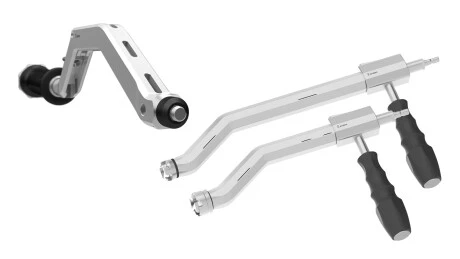
- The instrument needs strength or force
- Surgeon feel is critical
- The instrument is used frequently
- Cleaning is simple and reliable
- Tray management is efficient
- The procedure is high volume
- The reusable system has already been optimised
The goal is not to remove reusable instruments. It is to use them where they add the most value.
Why hybrid instrument systems may be the practical future
Hybrid instrument systems combine reusable and single-use elements. A reusable core can provide strength, control and familiar handling, while a single-use or limited-use component manages wear, sharpness, cleanliness or procedure-specific needs. This can reduce the burden while protecting surgical performance.
Iain explains the model with a simple analogy:
“A well-designed hybrid system keeps the part that doesn’t wear out and makes the part that goes blunt, dull or damaged single-use or limited-use.”
A hybrid system might include: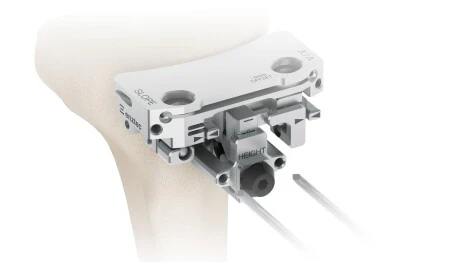
- A reusable handle with a limited-use cutting component
- A reusable jig with a single-use insert
- A smaller reusable tray supported by sterile procedure-specific parts
- A durable core instrument with replaceable wear components
The hybrid design asks which part needs to be durable, which part wears out, which part is hard to clean, and which part adds unnecessary cost or complexity.
For orthopaedic OEMs, hybrid systems may help reduce tray complexity, improve procedure readiness and support more efficient product rollouts.
Decision checklist: reusable, single-use or hybrid?
OEMs and hospitals should assess reusable, single-use and hybrid instruments against lifecycle cost, sterile processing burden, logistics, infection risk, material use, procedure volume, supply reliability and surgeon confidence.
Use these questions as a starting point:
| Decision Factor | Key Question |
| Instrument function | Does it require strength, rigidity or tactile feedback? |
| Cleaning complexity | Is it difficult to clean or inspect? |
| Wear and damage | Does performance decline with repeated use? |
| Tray burden | Are unused instruments being processed in every case? |
| Procedure volume | Is it used often enough to justify reuse? |
| Location | Is the setting close to reliable logistics and CSSD support?v |
| Sustainability | What is the full lifecycle impact? |
| Surgeon confidence | Will it feel right and support control? |
The answer will rarely be the same across a whole tray. That is why the instrument strategy should happen at the component level, not just the system level.
How Enztec supports smarter orthopaedic instrument strategy
Enztec works with orthopaedic device companies to design premium instruments that support product success, surgeon confidence and scalable market growth.
Its role is not to push reusable, single-use or hybrid systems as a default answer. It is to help partners make the right design decision for the product, procedure and market.
That approach reflects Enztec’s position as a trusted extension of device company teams. Enztec brings together design, engineering, manufacturing and regulatory understanding to solve complex instrument challenges, from early design decisions through to scalable supply.
For OEMs bringing premium implants to market, the supporting instrument strategy needs to uphold the same standard of quality, confidence, and usability.
Iain describes Enztec’s mindset clearly:
“We aren’t surrounded by people who say this is the way it has always been done. It has always been easier for us to challenge ideas and come up with new concepts.”
That matters as orthopaedics moves into a more nuanced phase of instrument design.
Frequently Asked Questions
Are single-use orthopaedic instruments more sustainable?
Not always. Single-use instruments create material waste, while reusable instruments require water, energy, chemicals, packaging, transport and sterilisation. The more useful measure is lifecycle impact, which is based on the instrument, procedure, and setting.
Are reusable instruments cheaper than single-use instruments?
Reusable instruments can be cheaper at scale, especially when they are used frequently and reprocessed efficiently. But their true cost includes cleaning, repairs, logistics, storage, rep time and theatre delays. Single-use instruments may offer a more predictable per-procedure cost.
When should single-use instruments be considered?
Single-use instruments should be considered when components are hard to clean, prone to wear, procedure-specific, easily damaged or costly to manage through reusable trays. They may also help when fast turnaround or predictable availability is important.
When are reusable instruments still the best option?
Reusable instruments are often best when strength, rigidity, force and surgeon feel are essential. They also make sense for durable, frequently used instruments supported by efficient sterile processing systems.
What is a hybrid instrument system?
A hybrid instrument system combines reusable and single-use elements. For example, a reusable handle may be paired with a limited-use cutting component, or a reusable jig may use a single-use insert. The goal is to reduce the burden without compromising performance.
Final Takeaway
Reusable vs single-use orthopaedic instruments should not be treated as a binary choice.
Reusable instruments will remain essential where strength, force and surgeon feel matter. Single-use instruments will continue to grow where cleaning, wear, logistics, or procedural risk creates hidden costs. Hybrid systems may offer the most practical middle ground.
For OEMs, the better question is:
What instrument strategy gives surgeons confidence, reduces system burden, supports sustainability goals and helps the product succeed in the market?
Enztec’s role is to help OEMs think beyond the instrument itself. A well-designed single-use or hybrid solution can support the full perioperative team: sterile services, infection prevention, operating room staff, surgeons and commercial partners and result in great patient outcomes.
Talk to Enztec about balancing cost, sustainability and performance in your orthopaedic instrument strategy.